Friday, April 24, 2009


Today my friend Colleen and I were enjoying some heavy indie beats in the car, occasionally adding our own sounds to the chaos when it dawned on us: we've entered a musical era, which in some ways, parallels Modern Art movements.

The goal of Modern Art movements such as Impressionism, Post-Impressionism, Fauvism, etc. was to create an emotional experience for the viewer. The art wasn't as concerned about the subject matter, but the spiritual effects it had upon the viewer while contemplating art. That profound experience became the goal of the artists, and they experimented with any style available to them in order to accomplish this.

Whenever my mom and I get in the car, whether to drive across the state or hop in the car for a quick cup of coffee, I bring with me a stack of CDs along for the ride. Every time, without fail, my mom pokes fun at the empty lyrics. "Now what in the world does (insert empty lyric) mean?" "...I don't know? But isn't it a great song?" I reply.

But what makes them great? I realize as she repeats the words I never thought to really listen to them before, but why? The musicians accomplished creating such unique and powerful instrumental sounds, words became unnecessary in evoking the emotions they were trying to convey to their listeners. Fast and upbeat instrumentals energize, while more slow tunes cause the listener to become reflective, or relaxed.

However, I have a strong aversion to music with a catchy tune, but paired with pathetically weak lyrics whose lines repeat an intoxicating number of times (think "Stanky Leg"). I have a difficult time enjoying the song despite how entertaining the beats may be, as the irritating loop of words seems copy-and-pasted onto my subconscious for the next few hours.

Of course there are mainstream exceptions. I've contemplated the deep words of artists like Benjamin Gibbard, Conor Oberst and Sufjan Stevens (and there are no doubt hundreds more musicians who can actually write), but a disturbingly larger fan base has established for musicians known for catchy tunes, while the annoying words paired with the beats are ignored.

Will the music world ever be revamped to its former glory of the turbulent '60s and 70s, when young and adult alike found refuge in the revolutionary words of Bob Dylan, John Lennon, or Paul Simon? Will songs really fighting for something flood the worlds speakers again, or are we cursed to hear ones like "Soulja Boy," or "Hot N Cold," on eternal repeat?

Wednesday, April 22, 2009

I'D LIKE TO DO SOMETHING UNUSUAL...


...For Once

You know what's genius? Hairdryers with those retractable cords installed in them. That alteration became a solution to the most aggravating part of the hair-drying process; how many times have you tightly wrapped the long cord around the neck of the hairdryer only to have it unwind on itself? Inventions like these prompt us to ask ourselves, "Why didn't I think of that?"

I used to look at a Mondrian (those simplistic, modern paintings made of primary-colored squares and rectangles separated by simple black lines), and say, "I could totally make that. How is this art?" I've critically gazed at a piece by Van Gogh and noted, "That can't be very hard. I could probably do that and this guy's considered an artistic genius."

The more I learn about the context behind hugely popular artistic movements the more I ask myself, "could I have thought of something like that?" and the less sure I become of my ability to create works as balanced, or conversely, dissonant as the seemingly simple pieces done by Mondrian or Van Gogh. It takes a great mind to conceive something genius and organic that sways from what's familiar, which prompts my next question. How can you think outside of the box when you're locked inside? You can't find an escape because you're so caught up about how you're inside the box thinking of anything outside of it is impossible; only when you forget you're inside the confines of the box will you find a way out of it.


André Breton (pictured above), the "Pope of Surrealism," built the foundation of this movement from a moment that occurred as described above. When he lay in bed about to sink into sleep, a strange sentence leapt in his mind; this sentence was: 'A man is cut in half by the window.' He became mesmerized by this simple sentence as it seemed to breed independently, from his subconscious. He lay there visualizing the man standing upright, walking with a window "perpendicular to the axis of his body," (Breton, Le Manifeste du Surréalisme, 1924). Breton imagined the window around his waist secured from him leaning out of a window then straightening up again.

He decided to incorporate this unusual sentence and mental image into something poetic, and was surprised that as he began to write, a series of sentences equally compelling followed. Breton shared these findings with a French writer, activist and Dadaist (another artistic movement which came before Surrealism, though embodied some similar theories of irrationality in art), Philippe Soupault. They decided to exercise the finding by writing automatically: quickly, without meditation, and found their works to show shocking similarities.

"...in both cases there was the illusion of an extra-ordinary verve, a great deal of emotion, a considerable assortment of images of a quality such as we would never have been capable of achieving in ordinary writing, a very vivid graphic quality, and here and there an acutely comic passage," (Breton, Le Manifeste du Surréalisme, 1924).

Thus Surrealism was born, an artistic and literary movement which shook the Art world and continues to inspire artists today; and all bred chiefly out of a revelation. I say "chiefly," because though the strategies employed by Surrealists, such as Automatism, were organic, the idea of trusting irrationality over human logic was not. This is when understanding the context of artistic movements is important, as one must examine the state of the world in comparison to the movements which came out of it to better grasp the artists perspectives.

Just a year before the Surrealist Manifesto was published, the Allied powers signed the last peace treaty that marked the finish of WWI. People across the world were appalled at the devastation caused by WWI and at the mere fact that humans were capable of such wreckage, especially to each other. Out of this disgust, people began to wonder why we depend on human reason, which was proved by WWI as flawed. Surrealism was an escape from human reason to something deeper and more authentic, unharmed by imperfect rationale.

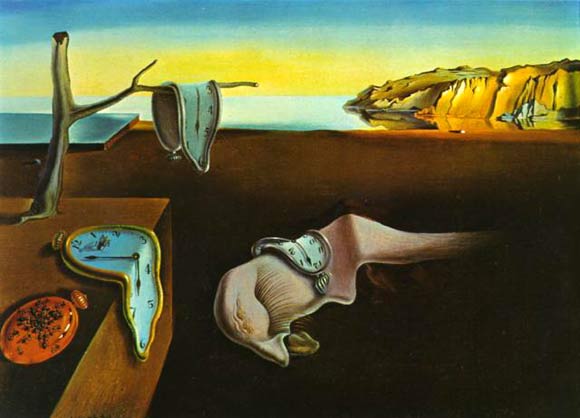
This irrationality was harnessed through strategies such as Dali's "paranoiac-critical Method" in which he created scenes that were distorted, though painted with such precision the viewer would contemplate that it could represent reality. This is seen in his famous piece, "Persistence of Memory,” where the lines were painted and blended with such precision, the strange subject matter seems almost feasible.

Although Surrealism was unique (in many ways) from anything that came before it, the movement has stirred confusion in its viewers for different reasons than other Modern art movements. With Surrealism, many people were simply confused about what was being represented in the art works, less than the earlier noted response of, "I could do that." Those involved in the later movements, such as De Stijl and Abstract Expressionism, were met frequently with this response, (mostly from those who looked at the art instead of what the art represented).

The De Stijl movement came shortly after the Surrealist movement and was also a response to WWI; however, De Stijl trusted human rationale and rested in the utopian ideal of finding a universal balance and harmony in art, which would be projected onto the viewer’s life. As Piet Mondrian's art encompassed, this harmony would be achieved by using only the purest colors (primary: red, blue and yellow, as well as black and white), and the simplest lines (vertical and horizontal). Though the paintings appear easy to do, Mondrian would work and re-work his paintings until he felt they were absolutely balanced, that if it were placed on a point at the center of the artwork, it wouldn't tilt in any direction. Though his work is highly minimalistic, once put into context they are quite lovely; I especially enjoy his “Composition with Red, Yellow and Blue.”

All of my life, when placed before a Jackson Pollock I would cringe, and note to myself, "Why Pollock, how edgy of you. You threw paint on a canvas and called it art." Though, big surprise, I was ignorant to what Pollock was trying to accomplish with his art and in what context. Again, the theme arises that what art was doing means much more than the art in and of itself. Pollock was creating art amidst the events of the Cold War, the United States was aggressively campaigning Democratic ideals of freedom and liberation, and it’s hard not to look at a painting done by Pollock without feeling a sort of unshackling. As my art history teacher noted, though many people assume what Pollock did was simple; no one has been able to replicate what Pollock did.

Let us examine his work more closely, take "Number One" for example. There exist clear patterns of movement in his work, and deliberate layering of color. There are no focal points in his work, so when people view the art, their eyes are constantly moving about the canvas. There is simply no place to rest your eyes. Accomplishing this is an artistic science, one Pollock did in a totally provocative way.

Thus, I ask myself: will my "Ah-ha!" moment ever come, or are they secured for a handful of extraordinary people? The most difficult part of this meditation is knowing that I have to stop searching for my moment if I want to find it. Instead, I've got to continue doing the things that I love and hope I'll be tormented by a "A man is cut in half by the window" moment one of these nights too.


Photograph of Andre Breton: http://www.leninimports.com/andre_breton_gallery_5.jpg.

Sunday, April 19, 2009

LIFE IN LIMBO

Living in Spokane over the summer taught me a skill or two, among them how to properly plant new maple trees into virgin soil while the thermometer read 94 degrees (a skill I hope to never exercise again) and how to do a 180 on a knee board (though I'm obviously not one of those boys, the video gives you an idea of what this looks like), but namely, how to live independently from lifelong companions.

My kitchen clock read 10:42 a.m. this particularly sweltering July morning when I woke up to an empty house, a half full pot of coffee and a serving of Kashi cereal calling my name. After breakfast and an hour or so of mindless morning TV, I decided to do something productive.

I have a slightly pretentious aversion to reading anything other than classics. There are a few I've had my heart set on reading, such as The Invisible Man, The Count of Monte Cristo, Don Quixote, etc. but alas, the only classic my parents own that I haven't read is Les Miserables. This is all well and good but the novel is easily the size of a few light summer reads put together, but since it was all we had, I decided to settle for it.

After reading a whopping five pages, my cellphone started ringing with a "Restricted" number on the other end. My initial reaction to the call was to ignore it, restricted calls are never good; with my luck I'd answer and the last person I would want to speak to would greet me from the other end.

Courageously, I answered. Much to my delight it was one of my closest friends, Shannon, calling from halfway across the world in northern France.

I have missed my girlfriends dearly since the move, and knowing they were enjoying fresh baguettes with salami and Gruyere cheese on the Seine without me was nearly unbearable. They reported the food was divine, the shopping was far too expensive, and the French aren't as cold as Americans like to paint them.

After my chat with Shannon I emptied the trunk of my car, which had been stuffed full of various household knickknacks that somehow made their way into my possession. I decided I deserved a break once the last item was put away just as my parents pulled up with a truckload of plants and a new tree for the backyard.

The next three hours would consist of my mom and I digging holes and planting two dozen little bushes (mind you it was no short of 90 degrees outside) while Leo enjoyed the golf on TV.

In the evening, the three of us cozied up on the sofa as my mom and I watched the tail end of "Becoming Jane," while my dad made fake snoring noises and a racket in the kitchen rinsing out the sink, loading the dishwasher and crumpling bags after tiring of the sappy film.

This was a testament to my longstanding belief that when it comes to television etiquette, boys are hypocrites. Women across the world have been hushed as the "game of the century" unfolded on the television, but once ladies try to enjoy a decent romantic flick all rules of courteousness are forgotten.

I realized in those annoying moments how appreciative I am of my parents, foibles and all. Though my dad knew just the buttons to push to send my Mom and I over the edge, it was all in good fun. As we pressed the rewind button time and again to catch sweet nothings missed under the hum of my fathers kitchen-clamor, deep down we were glad my Dad knows how to joke with us. We're glad he has a silly side and a good sense of humor.

When best friends are placed miles apart, one learns how to appreciate those who have been around all along. While in the past I may have called my girlfriends immediately after I secured my first job, watched concert of a lifetime, or met someone new and interesting, instead I find myself dialing my sister or my Mom's phone numbers.

It is not that friends are any less important than they were before, distance simply puts a magnifying glass on what relationships have secured the deepest roots.

Though I've never liked change much, I think this realization has made my change of scenery a bit easier to cope with.


Video courtesy of youtube.

Thursday, April 16, 2009

A BIT OF AN IDENTITY CRISIS


First Thoughts on Moving Across the State

Recently I've had the urge to cry whenever I talk about important things with my Mom and Dad. I’ve always been a “crier,” not the annoying kind who tears up spontaneously, but the nostalgic kind who over-thinks things and daydreams too often. Though I’ve mastered the art of holding my emotions back, the urges come more frequently since my move across Washington.

Trading high school surroundings for university life has prompted me to reflect over the security of familiar things: familiar places, familiar people, familiar streets and trees and daily routines.
Had I chosen to attend a university on the coast I may have missed this, “identity crisis,” as I’ve left my home and wonder now if I'll go back or stay here or if I should travel elsewhere. For now, ridiculously expensive tuitions and enormous student populations have steered me eastward.

I’ve never quite known what to do with myself in the long run and this new chapter brings me back to the begging question of career and purpose: what was I put here to do? How can I possibly make a mark when there are thousands who are more talented and equipped than I am? This change of scenery has renewed my zeal for Seattle culture and it’s hard not to think everyone here is clueless. I want to have an open mind but compared to the vivacious culture of the west side, Spokane seems to fall leagues short. For this, my questions may have been answered, as leaving opened my eyes to the extent I adore sharing with those around me the things I’ve stumbled upon throughout cities I’ve visited.

If I could choose to do only one thing for the rest of my life it would be exploring the world of art, theater, music, fashion and food and sharing my discoveries with the world. I’d inevitably start with a cluster of stories that bore me and suck my passion dry in order to prove my worth, while the chance lingers the opportunity to do what I love won't come. It must be the thought that all I’ve worked for could amount to nothing that hinders me from pursuing the career I believe is a truly inspiring, while I recognize achieving something seemingly untouchable only happens if one tries.

I suppose until I decide which path to steer towards next, all I can hope for is to keep Seattle close to my heart and maybe rub a little of the west coast culture on these east side kids, while hopefully finding and a bit of direction and drive.


Photo courtesy of: www.flickr.com/photos/rejuvesite/297088148/

FROM JAM SESSIONS TO JAM-PACKED SHOWS


How Whitworth University musicians get out there

In an unfinished brick room of The Empyrean coffeehouse, a captivated audience sat amid a canopy of dim Christmas lights as the raw and mellow sounds of Keep Pennsylvania Beautiful swirled throughout the space.

The lead singer, Tyson Motsenbocker, sings as if no one else is in the room. His eyes remain closed as he strums his guitar and he sings words of young love, broken hearts and fond memories, breaking the palpable silence.

This band, which appears to leave its audience members feeling as though they have peered through the heart of its musicians, is comprised of Whitworth students and graduates. These guys first started playing together in 2006 while living in Keola, once a 14-person Young Life-themed dorm.

Keep Pennsylvania Beautiful is one of a dozen or so at Whitworth that began after casual “jam” sessions among friends, which inspired them to take their musical aspirations to the next level. Now these musicians are making a name for themselves – not just on campus, but also throughout the Spokane area.

Word-of-mouth across the campus is the first tool used to spread awareness about these bands.

Members of Keep Pennsylvania Beautiful do their best to advertise their shows, on-campus and off, but front man Motsenbocker says, “Some of our best shows are at Whitworth because a lot of people come.” Friends of band members invite their friends, who invite other Whitworth students, ensuing a domino effect.

Many of these on-campus shows are free performances. “We’ve done a ton of benefit shows, a ton,” Motsenbocker said.

Similarly, guitarist and lead singer of Caulfield (and his Magical Violin), Mikey Ferrario, enjoys playing on-campus for the audience Whitworth attracts.

“The crowd Whitworth draws is pretty good…it’s pretty diverse,” Ferrario said.

Though most students prefer walking to Mind & Hearth to see Whitworth bands play, a handful of devoted music junkies will drive or walk off-campus in support of their peers’ musical endeavors.

A common venue for Whitworth bands, such as Keep Pennsylvania Beautiful and the harmonious female duo Olive Green, is The Empyrean coffee shop.

In its unfinished back room, rustic beams strung with lights give the perfect backdrop for the “rootsie” or folk-inspired sounds these bands create.

“For me, it’s all about the mood lighting,” AJ Hanenberg, the bass player for Keep Pennsylvania Beautiful, said. “I feel less self-conscious. I can lose myself in [the music].”

The band has done close to 200 shows, Motsenbocker estimates, many of which were performed under the harsh fluorescent lights of the HUB multipurpose room – a space with tall ceilings, large windows and bareness that takes away from the intimacy of their performances. Compared to the cold atmospheres often supplied by Whitworth’s brightly-lit facilities, The Empyrean is, “by far out most comfortable place to play,” Motsenbocker said.

For Ferrario and the other members of Caulfield (and his Magical Violin), playing off-campus is preferred to playing at Whitworth.

“We like to play house shows the most,” Ferrario said.

It gives their friends a chance to relax and socialize in a more intimate setting, he explained. Though many of their fans are over 21, people of all age groups are welcome to watch.

“We do not play any shows that are not all ages. We love all ages,” Ferrario said.

Though the bands agree some of their most laid back shows are those where the audience is heavy with Whitworth students, Motsenbocker said, “Atmosphere is number one,” when it comes to the makings of a good show.

In an effort to balance the two elements, members of Keep Pennsylvania Beautiful vigorously market their off-campus shows to Whitworth students through such mediums as their music MySpace as well as their Facebook page, utilizing “event invites” to encourage their peers to attend.

Members of Caulfield (and his Magical Violin) use more traditional marketing tools to promote their shows, “sometimes we tell people we know to come. Or we put up posters,” Ferrario said.

Publications like Warren Hall’s Stall Street Journal and Spokane’s Inlander alert students and the general public about upcoming shows. One of these publicized shows was held on March 6, at which Keep Pennsylvania Beautiful played alongside acoustic soloist Kevin Long and Portland’s up-in-coming indie group Blind Pilot, a band whose fan-base is nationwide.

Blind Pilot is playing in this year’s Sasquatch, an annual music festival that showcases some of the best folk, experimental, indie and alternative bands in the world. Thousands flock to this festival, marking it as a milestone in any participating musician’s musical career. When asked what it was like playing at The Empyrean the same night as Blind Pilot, Motsenbocker seemed hypnotized.

“[It was] super amazing! …It was great. Blind Pilot is going places,” Motsenbocker said.

Like Blind Pilot, Keep Pennsylvania Beautiful made its start playing small shows in Spokane and is slowly making a name for itself as a band worth taking seriously. The members plan to continue their musical career together after the remaining students involved graduate. The tour they anticipate to complete post-graduation will include cities on the west side such as Seattle, Bellingham and Anacortes, Wash.

However, performing isn’t everything; bands have to establish trust and friendship.

“Performing has sort of been on the back-burner lately,” Ferrario said. “That is a whole other experience in itself. Right now, we mostly just play and experience things together.”

Ferrario anticipates the intimate moments they have spent together will work to improve the band’s performing dynamic.

By entering the music scene while attending Whitworth, Motsenbocker and Hanenberg have learned valuable lessons with which they hope to pass on to their musically ambitious peers.

“Don’t play before you’re ready, but don’t be afraid to play shows,” Motsenbocker said.

Ferrario said fellow students can give valuable feedback. “There are a lot of amazing musicians around here that push each other to make better music,” Ferrario said. Expect to work for your seasoned sound and sturdy fan-base, he said.

“We played like 40 shows for free,” Hanenberg says, before they made enough money at one show to distribute a mere $10 to each band member.

Ambitious musicians across University campus' can likely encounter an eager and supportive audience, provided they are willing to work hard to keep improving their music and maybe tape up a few posters now and again.


Photo from The Blue Ribbon Tea Co. MySpace page

SAN FRANCISCO: WHERE LOOKS CAN BE DECEIVING

As my parents and I plan our annual trip to San Francisco, my father always reminds us, “Mark Twain once said, ‘The coldest winter I ever spent was a summer in San Francisco.’” He tells us with pride, as if these characteristically brisk summers were simply a virtue of the Bay Area, something to keep those who travel to California for the sun and surf away from “our” city.

I must confess, though I hear the wise words of Mark Twain sung zealously from my father’s lips nearly every year, I will likely always expect the weather there to be the same as the weather of the Seattle area, where I am from. Though the temperatures are comparable, the winds and mist of San Francisco would defeat those in Seattle on any occasion.

So there I was, angrily stomping down the streets of the city with an unwelcoming posture, narrowed gaze, angry brow and enduring frown across my lips, hoping to shield myself from the cold. The blue skies had tricked me into expecting temperatures warmer than the arctic ones that greeted us, so I left wearing nothing more than a T-shirt and light cardigan. At that moment I couldn’t help but recall my mother’s words as we left the hotel, “You’re gonna be cold out there!” Of course my condition became her fault. I rebuked her, reminding her my lack of layers would be remedied if only she would buy me more, warmer, jackets.

After clenching my dad’s arm in a desperate attempt to warm myself up, I gave a pathetic show of weak shivers and he suggested my mom buy me a jacket in town. There is something you need to understand about me to fully realize how those words sounded: fashion, next to writing and family and friends, is where I invest my passion. I see it as an art form, a way to express professionalism and a representation of character. Any opportunity to broaden my collection of a clothing item comes as a joy. However, when my father suggested I pick out a jacket in town, he meant a temporary solution – a quick fix, and a cheap investment; not meticulously tailored and beautifully constructed piece like I had hoped.

I am not one to judge the clothing choices of others, but rather to keep myself accountable for my own appearance, but when my mother picked up a large, novelty zip-up hoodie with the name, “Monterey,” embroidered in gaudy cursive across the front I couldn’t help but cringe. Nothing says, “I’m a tourist!” like a sweatshirt advertising the city in which you are visiting. To save money and avoid taking a lengthy detour, which would allow me to find a more fitting jacket, my mother purchased the heinous hoodie.

I cannot decide which vision is worse: the angry, hunched over, young woman who did not plan her outfit around the weather or the angry, embarrassed, young woman awkwardly crossing her arms in an attempt to conceal the large, “Monterey,” plastered across her chest. As if the sweatshirt wasn't a poor enough choice, I had decided to wear a pair of nice slacks that day. Nothing looks more ridiculous than an outfit suffering from split-personality disorder.

With my additional layer, I was able to endure the rest of the afternoon in slightly better spirits. We perused Fisherman’s Warf, rode the San Francisco trolley and window shopped in comfort; though my parents chuckled at my expense, as I believe they understood I wouldn’t be caught dead in a sweatshirt of this kind had circumstances been different.

I made a promise to myself that day that no matter how warm Seattle happens to be as my next San Francisco trip approaches, my suitcase will be full of jackets capable of providing the proper amount of warmth, while allowing me to present myself to the world in a less grungy manner.

As I write this, the same Monterey sweatshirt that caused me so much embarrassment down the cultured streets of San Francisco, warms and comforts me, bringing to memory the things my parents and I experienced together on our trip. The lining is still soft with unworn fleece from lack of use, making it one of my favorite “laying-around” jackets (a genre of clothing I had been planning to expand)

Wednesday, April 15, 2009

SEATTLE+TACOMA TEA SHOPS GIVE HEALTHY AND DELICIOUS ALTERNATIVE


With every social, political or economic trend, comes a contrasting one; a trend which says, "here is something better than what we've been doing." This phenomenon is happening before our eyes as countless Tacoma-Seattleites are choosing a cup of green tea over a cup of coffee.

Most have heard, "tea is full of antioxidants!" or "Green tea slows the signs of aging" and my friends, the rumors are true. This explains why worldwide, tea is the most widely consumed beverage second only to water.

Tea contains a storehouse of chemicals that can improve one's health, including:
  • Flavanoids (work against cancer and heart disease)
  • Amino acids (building blocks of proteins and source of energy)
  • Vitamin K (increases bone mass, inhibits cell death, may lighten dark under-eye circles, inhibits liver cancer)
  • Vitamin C (may decrease neurological effects of smoking, lowers incidence of: malnutrition, the common cold, pneumonia, heart disease, low sperm count, altitude sickness, asthma and cancer)
  • Caffeine (Central nervous system stimulant)
  • Polysaccharides (storage molecules for energy)

Tea is broken up into several subgroups according to how they are cultivated.
  • White tea: Unwilted and unoxidized [(not "fermented") white tea is the least processed, containing highest concentration of antioxidants]
  • Yellow tea: Unwilted and unoxidized but allowed to yellow
  • Green tea: Wilted and unoxidized
  • Oolong tea:Wilted, bruised, and partially oxidized
  • Black tea: Wilted, Sometimes crushed, and fully oxidized
Those teas that go through the more intensive cultivating processes are the darker teas, which have a bolder taste and take a few extra minutes to brew in order to release the strong flavor. The only tea listed above that has no caffeine is yellow tea, an essential substance to those constantly on the go.

As the trendiness of tea drinking increases, people are beginning to seek out quality tea shops. Two such local tea houses take on vastly different approaches, one a traditional Chinese tea shop and another that has adopted a more artistic approach to selling quality loose-leaf.

I first met Tim-the-tea-man during my University's Fall break, as my boyfriend and I found an escape from the cold of Pike Place Market in his tea tasting bar. Neither of us had been to a tea tasting before, thus were thrilled by the appeal of the brightly painted green walls, the shelves housing hundreds of huge glass jars filled with exotic loose-leaf teas, and how well Tim took care of us during our stay (and for free!).

We were handed, literally, hundreds of servings of tea in tiny tasting cups, each with a surprisingly robust and delicious flavor. Many feel like coffee, tea has an acquired taste; though those who believe these sentiments are likely to have never tasted Tim's teas before.

We enjoyed floral teas, buttery teas, grassy teas, nutty teas, bitter teas and mild teas. Not only was the selection seemingly never ending, Tim insisted we taste each tea at least twice to fully appreciate the flavor; as tea leaves are used a number of times. The first cup is generally not meant to be drank, as it is more meant to rinse off the leaves. The second-fifth infusions are usually the best.

In addition to knowing exactly which infusions would be the most delicious, Tim knew just how hot and for how long the tea leaves should be brewed. A general rule of thumb states that milder teas, like green and white, are to be brewed at lower temperatures (below boiling point) and for no more than three minutes. Other bolder teas, like oolong and black, are to be brewed at higher temperatures for a couple extra minutes to release the robust flavors.

The teas that Tim sells are imported Chinese loose-leaf teas that can sell for hundreds of dollars a pound. My favorite tea was his rose bud tea, which sells for over $400/lb. Instead of settling on this impossibly justifiable indulgence, I settled on a $2 bag of stevia, a natural sweetener that can be added to teas to decrease their bitterness.

Though I haven't had the chance to visit Tim again, the next time I'm in the need of some heart-warming infusions, I'll pop in to the sound of his cheerful "Hello!"once more.

More recently, my boyfriend took me to a tea shop he discovered in downtown Tacoma called Mad Hat, a play on the name of Alice in Wonderland's quirky character the Mad Hatter, who hosts a cluttered tea party.

This tea shop oozes an air of relaxation, for from the moment I stepped foot in this little shop I felt at home. The employees were scattered throughout the space, one sat lounging on a sofa near the front of the store reading a magazine and sipping a cup of tea, while laughter flooded the back rooms as one employee painted an abstract design on a bare canvas and another absentmindedly restocked the shelves with their little brown bags, filled with loose-leaf and uniquely labeled with creme colored slips of paper adorning animal or plant sketches that describe the tea inside.

Their shelves store hundreds of these little brown bags filled to the brim with quality loose-leaf. These bags are exploding with flavor, as the scents of their "Mad Tropical," and "Peppermint Leaf," permeate through the paper. We sat opening and smelling these bags for a quarter of an hour, having an impossible time deciding which exquisite tea we couldn't leave without. We decided to purchase a couple bags of mint tea, the Mad Tropical, an almond tea and their yerba mate, a tea popular in South America. The teas are all excitedly low-priced, as we picked up a bag with enough tea for hundreds of infusions for a grand total of $3, with our most expensive purchase at a whopping $8.

This tea shop houses not just delicious tea, but beautiful pieces of artwork as well. The walls that aren't lined with metal shelves covered in brown bags are clothed with abstract local art, some colorful and others equally dissonant black and white pieces.

If one isn't looking to purchase tea but rather enjoy it, he or she may come to Mad Hat to try five or six different samples available in thermoses near the front, while admiring provocative, local art.

Because of the health benefits, availability and delicious flavor enjoyed by tea drinkers for centuries, it's no wonder tea drinking has become a trend in recent years. In any major city, one is likely to find a relaxing place to sip a tasty, affordable infusion. Go find yours.

Tuesday, April 14, 2009

SEATTLE COFFEE SHOP REIGNS INTERNATIONAL BEST


And I don't mean Starbucks...


Espresso Vivace Rosteria’s meticulous approach makes it
arguably one of the best coffeehouses the world has seen

In Seattle, the birthplace of habitual caffeine consumption and the pickiest of coffee drinkers, hundreds of coffee locations (corporate or otherwise) are being stranded for David Schomer’s Espresso Vivace Roasteria.

Vivace has given a new meaning to their motto, “Una bella tizza di caffe,” or a beautiful cup of coffee, in not only the taste but also the artistry put into each cup. Vivace baristas are required to complete six months of intensive training to embody the passion and attention to detail the employees this two-location chain preserves.

The training is based upon founders David Schomer and Geneva Sullivan’s fifteen years of research in all aspects of espresso preparation. Their method is based on scientific methodology and inspired by coffee’s beauty and their goal is to promote espresso as a true culinary art. The baristas are trained in dosing, packing technique, brewing time, adjusting the grind and temperature control. After training is complete, Vivace baristas are able to roast the naturally sweet beans to perfection: saccharine, rich and with no bitterness to be tasted (a brewing blunder synonymous with corporate coffee stores).

Because perfect flavor isn’t enough, baristas top the espresso with a thick layer of silky foam, which if left untouched will last until the very last drop. This compact foam is made beautiful to behold as the baristas are taught how to use techniques that create intricate designs of leaves or hearts, an admirable cap to a flawless cup of brew.

Though many Seattleites see Vivace as a local secret, the Roasteria has gained international accolades. Reporter for the London Financial Times Nicholas Lander wrote, “... Vivace up on Capitol Hill. In my opinion it is the finest coffee bar in the US..." Similarly, celebrity chef Emeril Lagasse discovered and fell in love with Vivace.

"Probably the best coffee I ever had in the United States if not close into the world... I gotta tell 'ya, one of the best coffees I ever had in my life,” Lagasse said. “They kicked coffee up into an art form... To see a place like the quality of Vivace is unbelievable.”

Espresso Vivace Roasteria began as a coffee cart on Broadway Street in 1987, until Schomer and Sullivan secured a large space. Now, they have two expansive, Italian style locations on Yale Street in downtown and one on Broadway Street in Capitol Hill. For the convenience of their loyal customers, they also opened an espresso stand on Broadway Street.

If Espresso Vivace can reign supreme among the most unforgiving critics, those of the Pacific Northwest, they have rightfully earned their status as one of the best.
###
Contact: Espresso Vivace Roasteria
Tel. 206/860-5869
E-mail: info@espressovivace.com