
You know what's genius? Hairdryers with those retractable cords installed in them. That alteration became a solution to the most aggravating part of the hair-drying process; how many times have you tightly wrapped the long cord around the neck of the hairdryer only to have it unwind on itself? Inventions like these prompt us to ask ourselves, "Why didn't I think of that?"
I used to look at a Mondrian (those simplistic, modern paintings made of primary-colored squares and rectangles separated by simple black lines), and say, "I could totally make that. How is this art?" I've critically gazed at a piece by Van Gogh and noted, "That can't be very hard. I could probably do that and this guy's considered an artistic genius."
The more I learn about the context behind hugely popular artistic movements the more I ask myself, "could I have thought of something like that?" and the less sure I become of my ability to create works as balanced, or conversely, dissonant as the seemingly simple pieces done by Mondrian or Van Gogh. It takes a great mind to conceive something genius and organic that sways from what's familiar, which prompts my next question. How can you think outside of the box when you're locked inside? You can't find an escape because you're so caught up about how you're inside the box thinking of anything outside of it is impossible; only when you forget you're inside the confines of the box will you find a way out of it.
André Breton (pictured above), the "Pope of Surrealism," built the foundation of this movement from a moment that occurred as described above. When he lay in bed about to sink into sleep, a strange sentence leapt in his mind; this sentence was: 'A man is cut in half by the window.' He became mesmerized by this simple sentence as it seemed to breed independently, from his subconscious. He lay there visualizing the man standing upright, walking with a window "perpendicular to the axis of his body," (Breton, Le Manifeste du Surréalisme, 1924). Breton imagined the window around his waist secured from him leaning out of a window then straightening up again.
He decided to incorporate this unusual sentence and mental image into something poetic, and was surprised that as he began to write, a series of sentences equally compelling followed. Breton shared these findings with a French writer, activist and Dadaist (another artistic movement which came before Surrealism, though embodied some similar theories of irrationality in art), Philippe Soupault. They decided to exercise the finding by writing automatically: quickly, without meditation, and found their works to show shocking similarities.
"...in both cases there was the illusion of an extra-ordinary verve, a great deal of emotion, a considerable assortment of images of a quality such as we would never have been capable of achieving in ordinary writing, a very vivid graphic quality, and here and there an acutely comic passage," (Breton, Le Manifeste du Surréalisme, 1924).
Thus Surrealism was born, an artistic and literary movement which shook the Art world and continues to inspire artists today; and all bred chiefly out of a revelation. I say "chiefly," because though the strategies employed by Surrealists, such as Automatism, were organic, the idea of trusting irrationality over human logic was not. This is when understanding the context of artistic movements is important, as one must examine the state of the world in comparison to the movements which came out of it to better grasp the artists perspectives.
Just a year before the Surrealist Manifesto was published, the Allied powers signed the last peace treaty that marked the finish of WWI. People across the world were appalled at the devastation caused by WWI and at the mere fact that humans were capable of such wreckage, especially to each other. Out of this disgust, people began to wonder why we depend on human reason, which was proved by WWI as flawed. Surrealism was an escape from human reason to something deeper and more authentic, unharmed by imperfect rationale.
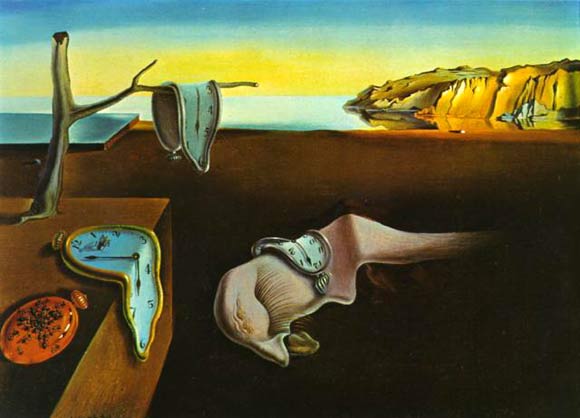
This irrationality was harnessed through strategies such as Dali's "paranoiac-critical Method" in which he created scenes that were distorted, though painted with such precision the viewer would contemplate that it could represent reality. This is seen in his famous piece, "Persistence of Memory,” where the lines were painted and blended with such precision, the strange subject matter seems almost feasible.
Although Surrealism was unique (in many ways) from anything that came before it, the movement has stirred confusion in its viewers for different reasons than other Modern art movements. With Surrealism, many people were simply confused about what was being represented in the art works, less than the earlier noted response of, "I could do that." Those involved in the later movements, such as De Stijl and Abstract Expressionism, were met frequently with this response, (mostly from those who looked at the art instead of what the art represented).
The De Stijl movement came shortly after the Surrealist movement and was also a response to WWI; however, De Stijl trusted human rationale and rested in the utopian ideal of finding a universal balance and harmony in art, which would be projected onto the viewer’s life. As Piet Mondrian's art encompassed, this harmony would be achieved by using only the purest colors (primary: red, blue and yellow, as well as black and white), and the simplest lines (vertical and horizontal). Though the paintings appear easy to do, Mondrian would work and re-work his paintings until he felt they were absolutely balanced, that if it were placed on a point at the center of the artwork, it wouldn't tilt in any direction. Though his work is highly minimalistic, once put into context they are quite lovely; I especially enjoy his “Composition with Red, Yellow and Blue.”
All of my life, when placed before a Jackson Pollock I would cringe, and note to myself, "Why Pollock, how edgy of you. You threw paint on a canvas and called it art." Though, big surprise, I was ignorant to what Pollock was trying to accomplish with his art and in what context. Again, the theme arises that what art was doing means much more than the art in and of itself. Pollock was creating art amidst the events of the Cold War, the United States was aggressively campaigning Democratic ideals of freedom and liberation, and it’s hard not to look at a painting done by Pollock without feeling a sort of unshackling. As my art history teacher noted, though many people assume what Pollock did was simple; no one has been able to replicate what Pollock did.
Let us examine his work more closely, take "Number One" for example. There exist clear patterns of movement in his work, and deliberate layering of color. There are no focal points in his work, so when people view the art, their eyes are constantly moving about the canvas. There is simply no place to rest your eyes. Accomplishing this is an artistic science, one Pollock did in a totally provocative way.
Thus, I ask myself: will my "Ah-ha!" moment ever come, or are they secured for a handful of extraordinary people? The most difficult part of this meditation is knowing that I have to stop searching for my moment if I want to find it. Instead, I've got to continue doing the things that I love and hope I'll be tormented by a "A man is cut in half by the window" moment one of these nights too.
Photograph of Andre Breton: http://www.leninimports.com/andre_breton_gallery_5.jpg.




No comments:
Post a Comment